
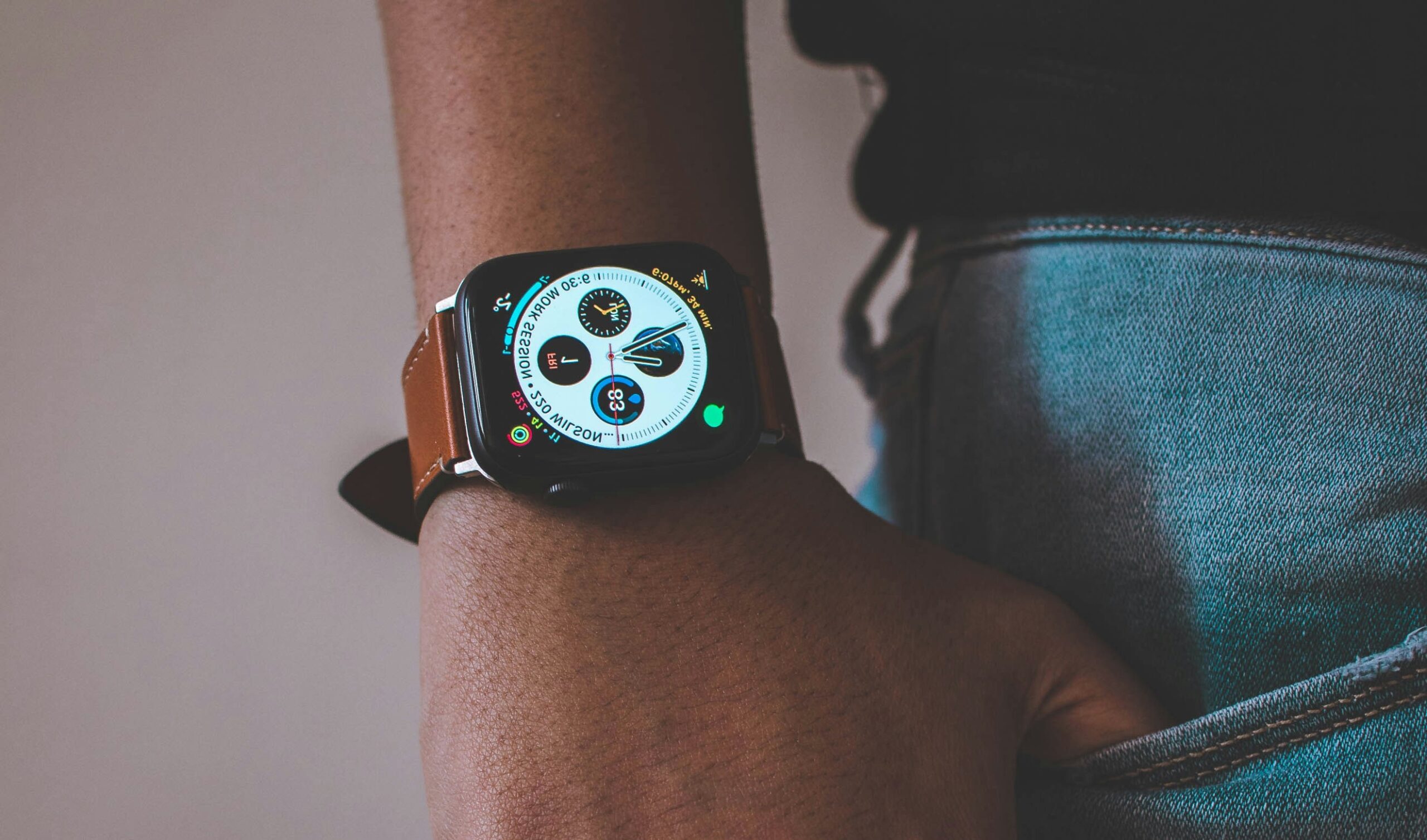
Your device is reading your body every night. Understanding what the wearable HRV number actually means — and where it falls short — is what turns data into something useful.
Wearable HRV data is one of the most useful windows into nervous system health that has ever been accessible to everyday people — and one of the most misread. The number that appears on your Oura, Garmin, or Whoop each morning is not a score. It is a measurement of the variability between your heartbeats during sleep, and what it reflects — when read correctly — is the balance between your sympathetic and parasympathetic nervous system activity the night before.
The problem isn’t the data. It’s the frame most people bring to it.
What wearable HRV is actually measuring in your nervous system

All consumer wearables reporting HRV are measuring the same underlying metric: RMSSD, the root mean square of successive differences between heartbeats. HRV4Training’s comprehensive review of wearable HRV science explains the mechanism clearly: a reduction in RMSSD typically indicates that parasympathetic activity is reduced — meaning the body has not fully recovered and cannot return to its standard range quickly. When the sympathetic system is dominant, the heart beats more metronomically. When the parasympathetic system is active, beat-to-beat variation increases. The number rises.
That’s the signal. What matters is whether you understand what sits behind it. A high wearable HRV reading is not telling you that today will be a good day. It’s telling you that last night, your nervous system completed more of its recovery arc — that the parasympathetic system had adequate time and conditions to assert itself, and that your autonomic flexibility is intact. As we explored in The Switch Within, that recovery arc doesn’t complete automatically — it requires the right physiological conditions to do so.
“The number on your wearable isn’t measuring how stressed you are today. It’s measuring how well your nervous system recovered last night — and that’s a fundamentally different question.”
Not all wearable HRV readings are equally accurate

Device accuracy varies more than most users realise. An independent 536-night validation study published in Physiological Reports (2025), conducted against an ECG reference, found significant differences between devices: Oura Gen 4 achieved near-perfect HRV concordance (CCC = 0.99), Whoop showed moderate agreement (CCC = 0.94), while Garmin Fenix showed poor agreement (CCC = 0.87) and was excluded from resting heart rate analysis entirely. Crucially, each device uses proprietary algorithms that process the same raw PPG signal differently — meaning two devices worn simultaneously on the same wrist can legitimately report different numbers, not because one is broken, but because they are answering slightly different questions.
How to actually use wearable HRV data for nervous system training
The most important reframe is this: ignore the daily number. Watch the 7-day and 30-day trend. A single low reading could be stress, alcohol, poor sleep, illness, high training load, or all of them together — there is no way to know from the number alone. A week of consistently lower readings is more meaningful. A month of steadily rising readings is the signal you’re looking for.
Your 30-day personal baseline is the only benchmark that matters. Population averages for HRV are nearly useless for individual interpretation — a reading of 45ms might be excellent for one person and a significant dip for another. The wearable’s job is to track you against you. When you add a consistent practice — meditation, breathwork, intentional sleep — the question the device helps you answer is: is it working? Research on what daily meditation does to the ANS confirms that chronic HRV improvements emerge over 7–10 days of consistent practice and persist between sessions. That’s exactly the kind of signal a wearable is built to detect — if you know how to read it.