
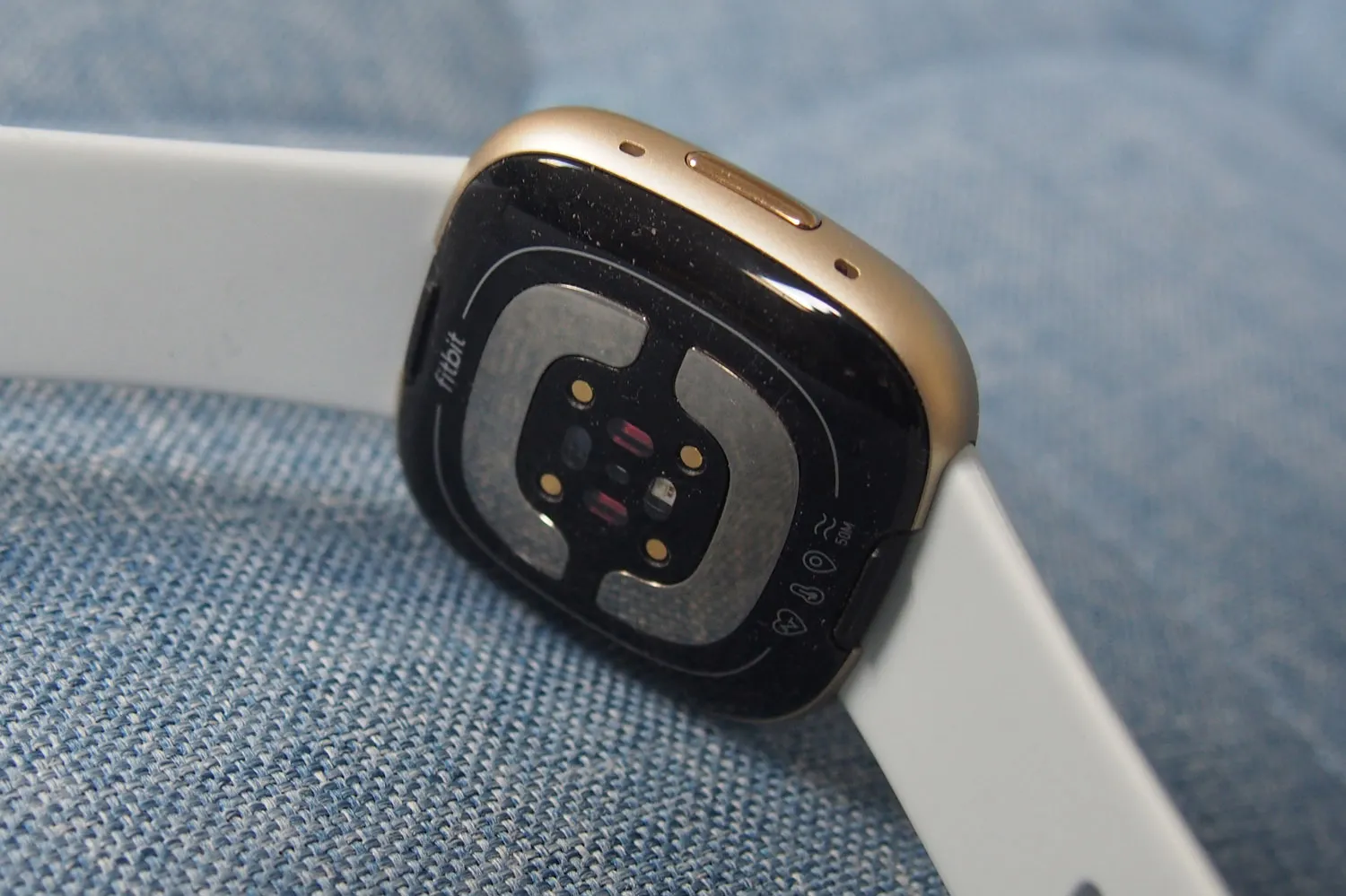
The Fitbit ECG nervous system story starts with a distinction most users miss. Most Fitbit models use PPG — the optical sensor that reads blood volume changes through the skin. The ECG-enabled models add electrical sensors on the device casing that record the actual electrical signal your heart generates.
How the Fitbit ECG sensor reads your nervous system’s control of the heart
The heart does not beat independently. The autonomic nervous system governs the timing and rhythm of every beat through the sinoatrial node — a small cluster of cells in the right atrium that acts as the heart’s natural pacemaker. When the sympathetic system activates, it accelerates the node’s firing rate and tightens the rhythm. When the parasympathetic system reasserts itself through the vagus nerve, it slows the node and restores natural variability. What the ECG records is the downstream electrical trace of this autonomic conversation — a continuous record of whether the heart beats in coordinated, rhythmic fashion or shows signs of electrical disruption.
Atrial fibrillation — the primary target of Fitbit’s ECG detection — occurs when the upper chambers of the heart beat chaotically rather than in coordinated sequence with the lower chambers. The autonomic system loses its clean regulatory signal, the sinoatrial node’s authority breaks down, and the rhythm becomes irregular and rapid. A clinical study of 440 people using the Fitbit ECG app alongside a 12-lead reference ECG found that the algorithm correctly identified AFib 98.7% of the time — and identified normal sinus rhythm with 100% accuracy.
As we explored in our full Fitbit nervous system review, the PPG sensor tracks what the heart does to blood flow. The ECG records what the heart’s electrical system does — and those are two different measurements with different clinical applications.
“Your autonomic nervous system determines the timing of each heartbeat. A significant drop in HRV may indicate that your body is experiencing illness, stress, or depression.”
Models with ECG capability: Fitbit Sense 2, Fitbit Sense, Fitbit Charge 6, Fitbit Charge 5 — and Google Pixel Watch series via the Fitbit ECG app. All have FDA clearance and CE marking.
Key stats: 98.7% AFib detection accuracy (440-person study) · 100% normal sinus rhythm accuracy · 455,699 participants in the Fitbit Heart Study · 30-second Lead I equivalent spot-check
What the ECG adds — and where it still falls short
The Fitbit ECG delivers something the PPG sensor cannot: a Lead I-equivalent trace you can export as a PDF and share directly with a cardiologist. AFib often presents intermittently — brief, asymptomatic episodes that a weekly or monthly clinic visit would miss. The ECG app allows on-demand spot-checks whenever the user suspects an irregular episode, and the Irregular Heart Rhythm Notifications feature runs passively during sleep to catch episodes the user never consciously experiences.
The limitations are real and worth understanding. The Basel Wearable Study — which compared Fitbit Sense against four other devices and cardiologist-interpreted ECGs — found an inconclusive reading rate of 14–20% for the Fitbit Sense across the study period. Software updates improved this progressively, but inconclusive results remain a genuine limitation, particularly in users with low signal amplitude or pre-existing rhythm anomalies. The Fitbit ECG reads from a single angle — equivalent to Lead I — compared to the 12-lead clinical standard. It detects AFib and normal sinus rhythm well. It cannot diagnose other arrhythmias, structural heart conditions, or subtle conduction disorders that a full clinical ECG would surface.
For most users, that scope is sufficient. The Fitbit ECG functions as an early-warning and conversation-starter — a clinical-grade signal from the wrist that prompts a GP referral rather than replacing one. Combined with nightly HRV trending and resting heart rate monitoring, it gives users something genuinely rare: a continuous window into how the autonomic nervous system governs the heart, across both the electrical and the vascular dimensions of cardiac function.
Leave a Reply